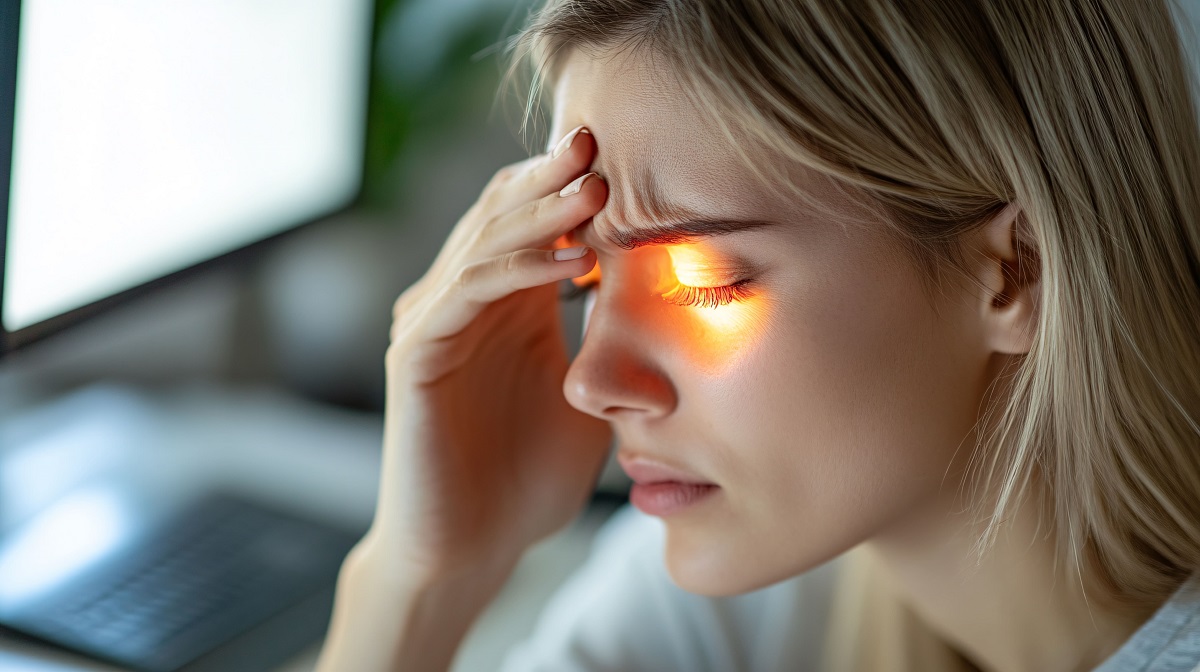
Light sensitivity, the medical term is photophobia, is not actually a fear of light. It is a genuine physical discomfort or pain that occurs when the eyes are exposed to light that would not bother someone without the condition. Bright sunlight, fluorescent office lighting, headlights at night, even a phone screen can trigger squinting, eye pain, or headaches.
The experience ranges from mild (squinting outdoors) to severe (needing to stay in darkened rooms). For most people, it sits somewhere in the middle and has an identifiable cause that can be addressed.
Here is what is most likely behind your light sensitivity, how to tell the difference between causes, and what actually helps.
What Causes Light Sensitivity in Eyes?
Light sensitivity is not a diagnosis on its own. It is a symptom, and the cause determines the right approach. The most common causes fall into a few clear categories.
Dry Eye Disease
This is one of the most underappreciated causes of photophobia. When the tear film that normally coats and protects the cornea is inadequate, the corneal surface becomes irregular and exposed. Light hitting an unprotected cornea is significantly more uncomfortable than light hitting a well-lubricated one.
People with dry eye disease often notice that their light sensitivity worsens throughout the day, as tears evaporate and the eye surface deteriorates. It is frequently accompanied by gritty or burning sensations, redness, and blurred vision. Treating the dry eye tends to improve the light sensitivity significantly.
Migraines and Ocular Migraines
Light sensitivity is one of the hallmark symptoms of migraines. During a migraine, the trigeminal nerve (which carries sensation from the face to the brain) becomes hypersensitive, making light signals feel significantly amplified. Many people who experience frequent photophobia and have not identified another cause are later found to have migraines or a migraine variant.
Eye Infections and Inflammation
Conjunctivitis (pink eye), uveitis (inflammation inside the eye), keratitis (corneal inflammation), and other infections can all cause acute light sensitivity. In these cases, the photophobia is usually sudden, accompanied by other symptoms like redness, discharge, pain, or swelling, and resolves when the infection or inflammation is treated.
Eye Allergies
Allergic reactions affecting the eyes cause inflammation of the conjunctiva, which increases light sensitivity alongside the typical itching and watering. If your light sensitivity is seasonal or correlates with specific allergen exposure, eye allergies may be the driver.
Post-COVID Light Sensitivity
Light sensitivity emerged as a reported symptom in some people following COVID-19 infection. It can appear during the acute illness and sometimes persist into the recovery period. The mechanism is not fully understood but appears related to inflammation affecting the trigeminal nerve pathway. Most cases improve over weeks to months.
Medications
A range of medications list photophobia as a side effect, including certain antibiotics, antihistamines, anti-nausea drugs, and diuretics. Some eye drops, particularly those containing preservatives, can also cause light sensitivity with frequent use. If your sensitivity started or worsened after beginning a new medication, that connection is worth raising with your prescribing doctor.
Serious Eye Conditions
Less commonly, light sensitivity can signal a condition requiring prompt evaluation: glaucoma (particularly acute angle-closure glaucoma, which is a medical emergency), a corneal injury or abrasion, or a retinal detachment. These cases are usually accompanied by additional urgent symptoms, but any sudden, severe onset of light sensitivity should be assessed quickly.
If you experience sudden light sensitivity with eye pain, headache, nausea, or vision changes, see an eye doctor or go to an emergency department promptly. Eye emergencies require fast action.
Why Are My Eyes Suddenly Sensitive to Light?
A sudden onset of light sensitivity that was not present before is more likely to have a specific trigger than gradual, chronic sensitivity. The most common sudden causes include a new or worsening eye infection, a corneal scratch or injury, the start of a new medication, or the onset of a migraine. Less commonly, it can indicate an acute eye pressure event or inflammation inside the eye.
Any sudden, unexplained photophobia, particularly with pain or vision changes, warrants same-day evaluation rather than a wait-and-see approach.
Why Are My Eyes More Sensitive to Light in the Morning?
Morning light sensitivity is particularly common in people with dry eye. During sleep, the eyes produce fewer tears and the surface becomes drier. Opening the eyes to light after a night of reduced tear production can cause significant discomfort until the eye re-lubricates naturally. Using lubricating eye drops before bed or upon waking can help considerably.
Some people also find that their eyes have been slightly open during sleep, which dries the cornea further. If you frequently wake with dry, red, or light-sensitive eyes, mention this during your comprehensive eye exam.
Can Dry Eyes Cause Sensitivity to Light?
Yes, and this connection is more direct than most people realise. The corneal surface is covered with nerve endings that are highly sensitive to environmental stimuli. When the cornea lacks adequate lubrication, these nerve endings are exposed and more reactive to incoming light.
Studies have shown a clear association between dry eye disease and photophobia. Addressing the dry eye, whether through lubricating drops, prescription treatments, or lifestyle changes, typically reduces light sensitivity as the corneal surface heals and stabilises.
How to Reduce Light Sensitivity in Eyes
The right approach depends on the cause, but several strategies help across most situations:
- Wear quality sunglasses with UV protection outdoors. Wraparound lenses that block peripheral light are particularly effective.
- Use lubricating eye drops if dry eye is contributing.
- Reduce screen brightness and use anti-glare filters.
- Wear wide-brimmed hats in bright outdoor conditions.
- Adjust indoor lighting where possible. Avoid flickering fluorescent lights.
- If migraines are suspected, speak with your doctor about migraine management, which often reduces associated photophobia.
For chronic or worsening light sensitivity, a comprehensive eye exam is the right starting point. Identifying the underlying cause is more effective than managing the symptom in isolation.
Are Blue Eyes More Sensitive to Light?
Yes, generally speaking. Eyes with less pigment in the iris (including blue and green eyes) allow more light to enter the eye, because the iris provides less natural filtration. This means people with lighter eye colours are statistically more likely to experience light sensitivity and photophobia. It does not mean light sensitivity in a blue-eyed person is abnormal, only that there is a physiological basis for the increased sensitivity.
Frequently Asked Questions
Why are my eyes suddenly sensitive to light?
Sudden light sensitivity is most commonly caused by an eye infection, corneal injury, new medication, or the onset of a migraine. Sudden photophobia with pain or vision changes should be evaluated promptly by an eye doctor.
Can dry eyes cause light sensitivity?
Yes. Dry eye leaves the corneal surface exposed and more reactive to incoming light. Treating the dry eye typically reduces the photophobia.
Is light sensitivity a symptom of COVID?
Light sensitivity has been reported as a symptom during and after COVID-19 infection. Most cases improve over time, but persistent post-COVID photophobia is worth discussing with a doctor or eye care provider.
How do I fix light-sensitive eyes?
Start by identifying the cause. Dry eye is treated with lubricating drops or prescription therapy. Migraine-related photophobia improves with migraine management. Infection-related sensitivity resolves when the infection clears. For persistent symptoms, an eye exam is the most useful first step.
Why are my eyes sensitive to sunlight all of a sudden?
Sudden sensitivity to sunlight specifically can be caused by corneal changes, dry eye flares, new medications, or a migraine episode. If it persists beyond a few days or is accompanied by pain, get it checked.
Are blue eyes more sensitive to light?
Yes. Less iris pigmentation allows more light to reach the retina. People with lighter eye colours experience more light sensitivity on average, though significant photophobia in any eye colour warrants investigation.
What causes light sensitivity in eyes after being in the dark?
Moving from dark to bright environments always requires adjustment, but if this adjustment feels unusually painful or slow, it can indicate dry eye, pupil dysfunction, or another condition. Normal adaptation takes a few seconds; painful or prolonged adjustment warrants evaluation.
Getting to the Root of Light Sensitivity
Light sensitivity that occurs occasionally in bright sunshine is a normal part of having eyes. Light sensitivity that interferes with daily life, appears suddenly, or persists for weeks without an obvious explanation is not something to simply manage around.
The causes are treatable in most cases. Dry eye responds to proper therapy. Migraine-related photophobia improves with the right management plan. Infections clear. Adjusting a medication resolves the side effect. The key is accurately identifying what is driving the symptom rather than guessing.
Eyes On Group provides comprehensive eye exams across Worcester, Randolph, Lincoln, and Cranston. Book an appointment and get a proper diagnosis.