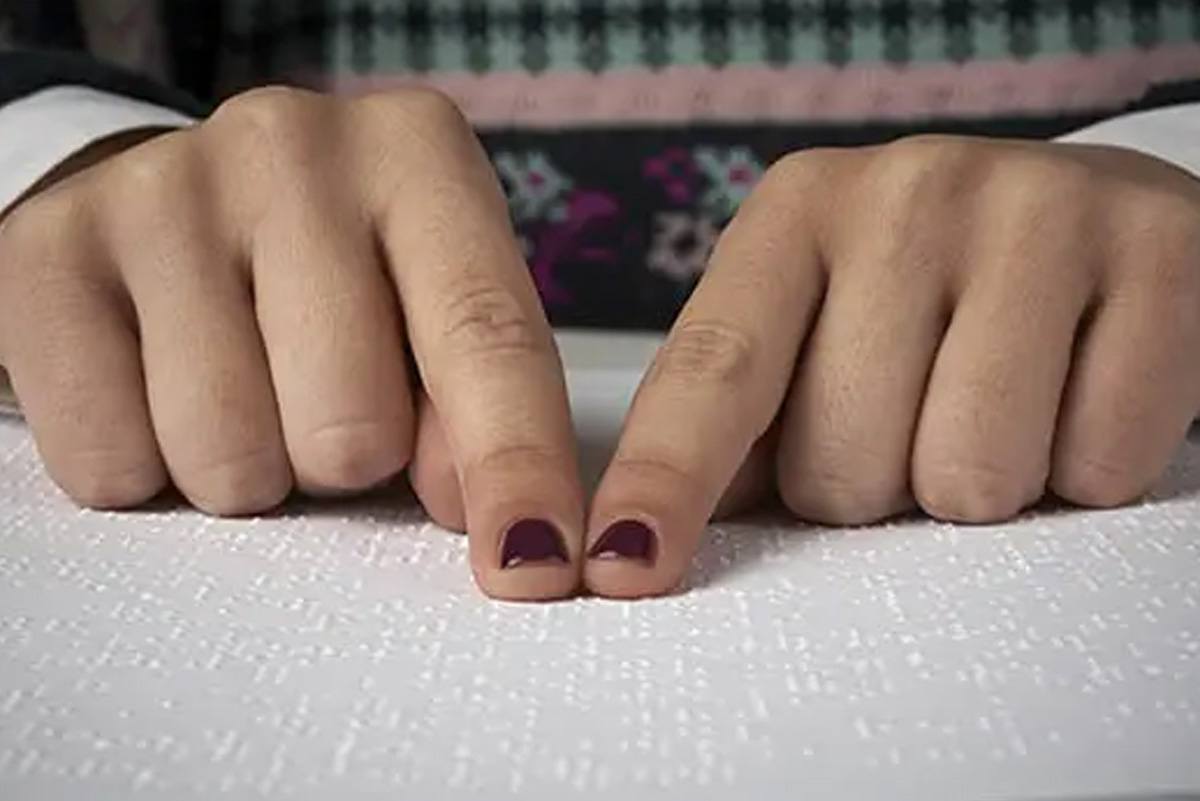
Each year, National Braille Day is celebrated to recognize the incredible impact Braille has had on individuals who are blind or living with vision loss. In Randolph, this day serves as a reminder of the importance of accessibility, literacy, and empowerment for the vision impaired.
What Is Braille?
Braille is a tactile writing system that allows people with vision impairment to read and write using their fingertips. It consists of six raised dots arranged in two columns of three, forming different combinations to represent letters, numbers, punctuation, and even music notation. Braille enables independent communication and access to education, greatly enhancing the quality of life for those with limited or no sight.
A Brief History of Braille
The system was invented by Louis Braille, a young Frenchman who lost his sight after a childhood accident. Inspired by a tactile military code called “night writing” developed by Charles Barbier, Braille created a more efficient method that could be easily learned and used. By age 15, he had developed the first Braille code, which was later refined and published in 1829. Today, Braille is used worldwide, adapted for multiple languages and scripts.
Different Grades of Braille
Braille is not a single uniform system. It has evolved into different grades to meet diverse needs:
- Grade 1: Basic representation of letters, primarily for beginners.
- Grade 2: Includes contractions, punctuation, and abbreviations, commonly seen in public signage or books for adults.
- Grade 3: Shorthand for personal notes and correspondence.
In addition, Braille may include graphs, illustrations, and symbols for more complex information, ensuring that the vision impaired can access educational and professional resources just like sighted individuals.
Writing Braille
Writing Braille requires specific tools:
- Slate and Stylus: Traditional hand tools for embossing dots onto paper.
- Braille Typewriter: Mechanical devices designed for faster writing.
- Electronic Braillers and Embossers: Modern devices that connect to computers, allowing digital documents to be printed in Braille.
These tools make literacy accessible, giving those with vision loss the ability to communicate effectively, pursue education, and participate fully in society.
Braille and Technology
While digital technology such as screen readers, audiobooks, and computer-based programs have expanded accessibility, Braille remains foundational. It allows individuals to maintain literacy, understand formatting and spatial layouts, and interact with printed materials in a tactile way that purely audio tools cannot replicate.
Promoting Eye Care and Vision Health
For individuals with partial vision or progressive vision loss, early and regular intervention is critical. Consulting an eye doctor for routine eye care can help monitor conditions such as glaucoma, cataracts, and macular degeneration, potentially preventing further loss of vision. Accessible tools like magnifiers, high-contrast text, and Braille resources complement modern eye care, creating a holistic approach to vision support.
On National Braille Day, we celebrate not only the brilliance of Louis Braille but also the ongoing efforts of educators, caregivers, and eye care professionals who support the vision impaired community. Learning Braille, adopting adaptive technology, and maintaining regular eye exams are all crucial steps in ensuring independence and quality of life.
At Eyeson Group, we are committed to providing resources, guidance, and comprehensive eye care to support those experiencing vision loss. Residents in Worcester, Randolph, Lincoln, and Cranston can access specialized services for visual rehabilitation, education on accessibility tools, and preventive care to preserve and protect remaining vision.
Celebrate literacy, advocate for accessibility, and take proactive steps toward healthy eyes this National Braille Day!