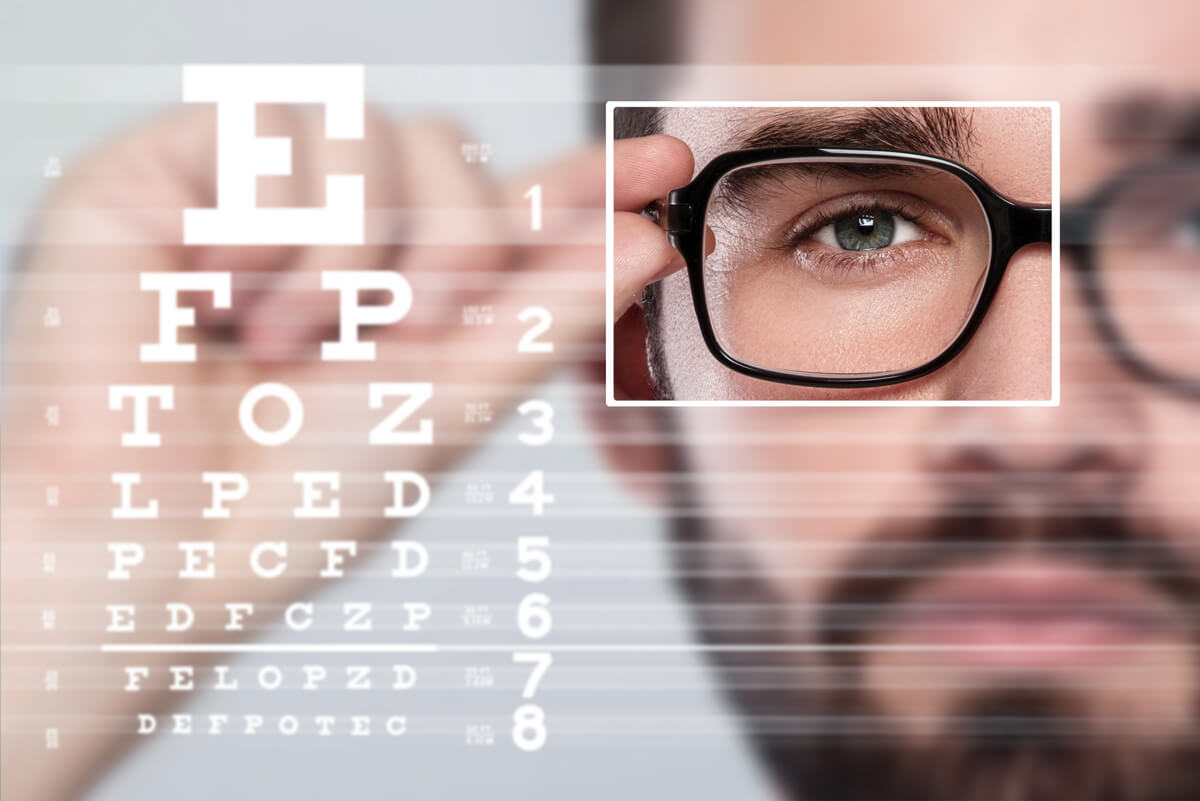
When you visit your eye doctor in Cranston for your regular eye exam, one of the first things you’ll likely encounter is the eye exam chart. This familiar visual test is one of the most common and effective tools used to measure visual acuity, or how clearly you can see at various distances. Learning how to read an eye chart can help you better understand what your eye doctor is evaluating and what your results mean for your eyesight.
The Purpose of the Eye Chart
The basic eye chart is designed to test how well your eyes can distinguish shapes and details from a standard distance—usually 20 feet in the United States. The measurement of 20/20 vision, which many people associate with “perfect eyesight,” actually means that you can see clearly at 20 feet what most people with normal vision can see from that same distance.
If you have 20/40 vision, you would need to be 20 feet away to see what someone with normal vision can see at 40 feet. On the other hand, having 20/15 vision means your eyesight is sharper than average.
Different Types of Eye Charts Used in Eye Exams
While most people recognize the traditional Snellen chart, there are several different types of eye charts used in modern eye exams, depending on your age, reading ability, and vision needs.
1. Snellen Eye Chart
The Snellen chart is the most common type of chart of the eye used in clinics and optometry offices. It features 11 lines of letters that get progressively smaller toward the bottom. Each line corresponds to a visual acuity level, such as 20/40 or 20/20.
During the test, your eye care professional will ask you to cover one eye and read the smallest line of letters you can see clearly.
2. Tumbling E Chart
For children or individuals who can’t read letters, the Tumbling E chart is used. Instead of letters, it uses a capital “E” pointing in different directions. The patient indicates which direction the “E” is facing, allowing the eye doctor to assess vision without relying on reading ability.
3. Landolt C Chart
Similar to the Tumbling E, the Landolt C chart replaces letters with circular rings that have small openings in different directions. This test is widely used in research and standardized testing environments.
4. LogMAR Chart
The LogMAR (Logarithm of the Minimum Angle of Resolution) chart is a more advanced version of the Snellen chart, offering more precise visual measurements. It is often used in hospitals and research for diagnosing specific eye conditions.
5. Picture or Symbol Charts
These charts feature simple shapes or images such as stars, circles, or animals—ideal for testing vision in young children or individuals with language barriers.
How to Read and Understand Eye Chart Results
When reading an eye chart for an eye exam, each line represents a different level of visual acuity. The result is written as a fraction (for example, 20/20 or 20/40).
- The top number (20) represents the testing distance (20 feet).
- The bottom number shows how far away a person with normal vision could stand to see the same line clearly.
Your eye doctor uses these results to determine whether you need corrective lenses, such as eyeglasses or contact lenses, to achieve sharper vision.
Beyond the Eye Chart: Why Comprehensive Exams Matter
While reading the eye exam chart is essential for testing sharpness of vision, it doesn’t reveal the full picture of your eye health. Conditions like glaucoma, macular degeneration, or dry eye disease can affect your vision even if you have 20/20 eyesight.
That’s why every comprehensive eye exam at Eyeson Group includes advanced testing beyond the basic eye chart—assessing eye pressure, retinal health, and overall visual function.
Eye Care Solutions for Clearer Vision
Knowing how to read an eye chart is just the beginning of understanding your vision. Whether you’re updating your prescription or experiencing visual changes, regular eye exams ensure that any issues are detected early.
At Eyeson Group, we provide complete eye care solutions for families in Cranston, Lincoln, Randolph, and Worcester. From routine vision testing to advanced eye health management, our dedicated team is here to help you see the world more clearly and comfortably.