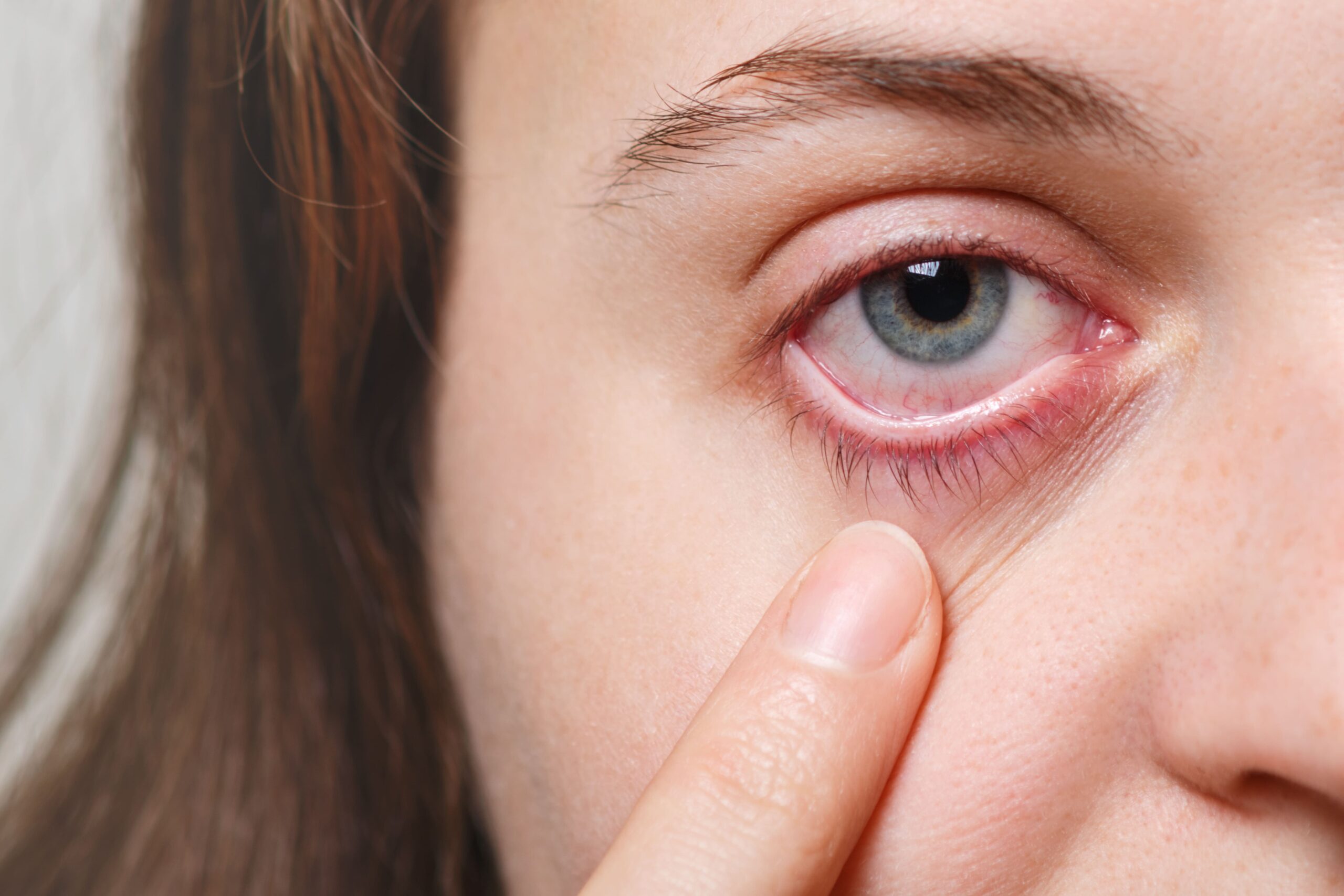
Red, watery, irritated eyes are miserable. They are also one of the most commonly misdiagnosed problems in eye care, because pink eye and eye allergies look almost identical. The difference matters. Antibiotic drops do nothing for an allergic reaction. Antihistamines do not clear a bacterial infection. Treating the wrong condition means days of unnecessary discomfort and, in some cases, an infection that gets worse.
This guide walks through the three main types of conjunctivitis, the one symptom that separates allergies from infection, and when it is time to call an optometrist.
What Is Pink Eye, Exactly?
“Pink eye” is the common name for conjunctivitis, an inflammation of the conjunctiva, the thin clear tissue that lines the inside of the eyelid and covers the white of the eye. When the conjunctiva becomes irritated, blood vessels dilate and the eye turns red or pink.
Conjunctivitis has three main causes:
- Viral infection (most common)
- Bacterial infection
- Allergic reaction
Each type has overlapping symptoms, which is why a correct diagnosis matters before you reach for any treatment.
Pink Eye vs. Eye Allergy: Side-by-Side Comparison
The table below covers the core differences. Itching intensity is the fastest differentiator in practice. Intense, persistent itching in both eyes at the same time points strongly toward an allergic cause.
| Viral Pink Eye | Bacterial Pink Eye | Eye Allergies | |
|---|---|---|---|
| Discharge | Watery, clear | Thick yellow or green | Watery, clear |
| Itching | Mild | Mild | Intense (key sign) |
| Eyes affected | Starts in one, spreads | One or both | Both at once |
| Contagious? | Yes | Yes | No |
| Common trigger | Cold or respiratory illness | Bacteria, contact lenses | Pollen, dust, pet dander |
| Crusting on lashes | Mild | Often significant | Rare |
| Sneezing / runny nose | Rare | Rare | Common |
| Treatment | Self-limiting; supportive care | Antibiotic eye drops | Antihistamines, eye drops
|
Viral Pink Eye
Viral conjunctivitis is the most common form and is usually caused by adenoviruses, the same family responsible for the common cold. It often appears alongside a runny nose, sore throat, or upper respiratory symptoms.
Key features of viral pink eye:
- Watery or slightly mucus-like discharge (not thick or pus-like)
- Often starts in one eye and spreads to the other within a day or two
- Light sensitivity and a gritty, sandy feeling
- Swollen lymph node in front of the ear, in some cases
There is no specific antiviral treatment for most cases. The infection is self-limiting, meaning it clears on its own within 7 to 14 days. Cool compresses and preservative-free artificial tears help manage symptoms while your immune system does the work.
Viral pink eye is contagious through direct contact with eye secretions and contaminated surfaces. Handwashing, avoiding touching your face, and not sharing towels or pillowcases are the most effective ways to stop it from spreading.
Bacterial Pink Eye
Bacterial conjunctivitis produces the most distinctive symptoms of the three types. The hallmark sign is thick, yellow or green discharge that causes the eyelids to crust shut, particularly after sleep.
Key features of bacterial pink eye:
- Thick, purulent (pus-like) discharge in yellow or green
- Significant crusting on the lashes, especially in the morning
- Can affect one or both eyes
- Less itching than allergic conjunctivitis; more of a burning or gritty discomfort
Unlike viral conjunctivitis, bacterial pink eye usually benefits from antibiotic eye drops. Common causes include Staphylococcus aureus, Streptococcus pneumoniae, and Haemophilus influenzae. Antibiotic treatment shortens the duration and reduces the risk of spreading to others or developing complications. Left untreated, some bacterial cases can progress to more serious eye conditions.
Bacterial conjunctivitis is also contagious. Children in school or daycare settings are particularly susceptible.
Allergic Conjunctivitis (Eye Allergies)
Allergic conjunctivitis is not an infection. It is an immune response triggered by allergens such as pollen, dust mites, mold, or pet dander. The immune system releases histamine in response to these triggers, and the eyes become inflamed as a result.
Key features of allergic conjunctivitis:
- Intense itching in both eyes at the same time (the defining symptom)
- Watery, clear discharge
- Redness and puffiness around the eyes
- Frequently accompanied by sneezing, nasal congestion, or a runny nose
- Not contagious
Because it is an immune reaction, not an infection, antibiotics have no effect. Treatment targets the histamine response with antihistamine eye drops, oral antihistamines, and mast cell stabilizers. Avoiding the trigger, when identifiable, is the most effective long-term strategy. The team at Eyes On can assess your symptoms and recommend appropriate treatment options. Learn more about eye allergy care.
Is Pink Eye Contagious?
This is one of the top questions people search when they suspect pink eye, and the answer depends on the type.
- Viral pink eye: highly contagious. Spread through hand-to-eye contact and contaminated surfaces. Can remain contagious for up to two weeks.
- Bacterial pink eye: contagious. Spread through direct contact with discharge. Contagiousness typically drops within 24 hours of starting antibiotic treatment.
- Allergic conjunctivitis: not contagious at all. It cannot spread from person to person because it is not caused by a pathogen.
If you are unsure which type you have, treat it as contagious until an optometrist confirms otherwise. This means frequent handwashing, avoiding touching your eyes, and keeping personal items separate from household members.
Contact Lens Wearers: Stop Lenses Immediately
If you wear contact lenses and develop any signs of conjunctivitis, stop wearing lenses straight away. Wearing contacts with any form of inflamed conjunctiva increases the risk of corneal infection significantly. This applies to allergic conjunctivitis too, not just infections. Resume lens wear only once your eye is fully healed and your optometrist has cleared it. If your eyes are chronically irritated, it may also be worth exploring dry eye treatment, since dry eye and contact lens discomfort often go hand in hand.
Treatment: What Actually Helps Each Type
Viral Pink Eye
- Cool compresses to ease swelling and discomfort
- Preservative-free artificial tears to flush and lubricate
- Rest; avoid screens and bright light if sensitivity is present
- Antibiotics: not effective and not recommended
Bacterial Pink Eye
- Antibiotic eye drops prescribed by an optometrist (commonly erythromycin ointment or azithromycin drops)
- Warm compresses to soften crusting on the lashes
- Careful hygiene to prevent spreading
Allergic Conjunctivitis
- Antihistamine eye drops (available over the counter or by prescription)
- Oral antihistamines for broader allergy symptom control
- Cold compresses to reduce swelling and itch
- Avoid the allergen if identified (pollen, pets, dust)
- Mast cell stabilizers for persistent or seasonal cases
When to See an Optometrist
Most mild cases of pink eye or eye allergies can be managed at home. These situations warrant a prompt appointment:
- Discharge that persists for more than three to four days
- Any change in vision, including blurring
- Significant pain inside the eye (not just surface irritation)
- Light sensitivity that is worsening
- Symptoms in a newborn or infant, which may indicate a more serious infection
- You wear contact lenses and have any form of eye inflammation
- You have tried over-the-counter treatment and symptoms are not improving
A comprehensive eye exam allows your optometrist to examine the eye under magnification, assess discharge, and rule out more serious conditions such as uveitis or corneal involvement. When in doubt, book an appointment at Eyes On. Getting the right diagnosis on the first visit saves time, discomfort, and money.
Frequently Asked Questions
How do I know if my red eye is pink eye or just allergies?
The strongest indicator is itching. Intense, unrelenting itch in both eyes at the same time points to allergies. Viral and bacterial pink eye can itch, but the itch is usually milder. If the discharge is thick and yellow-green, that points to a bacterial cause. If your symptoms arrived with a cold or respiratory illness, viral pink eye is more likely. When uncertain, see an optometrist for a definitive answer.
Can I spread pink eye to other people?
Viral and bacterial conjunctivitis are both contagious and spread through direct contact with discharge, contaminated hands, or shared objects like towels and pillowcases. Allergic conjunctivitis cannot spread because it is an immune reaction, not an infection. If you do not know which type you have, practice the same precautions you would for a contagious illness.
Do I need antibiotics for pink eye?
Antibiotics are only appropriate for bacterial conjunctivitis. Viral pink eye does not respond to antibiotics and clears on its own. Allergic conjunctivitis requires antihistamines, not antibiotics. Using antibiotic drops when they are not needed contributes to antibiotic resistance and does nothing to relieve your symptoms. An optometrist can confirm whether antibiotics are the right choice for your specific case.
How long does pink eye last?
Viral conjunctivitis typically lasts 7 to 14 days and resolves without treatment. Bacterial conjunctivitis often improves within 2 to 5 days of starting antibiotic drops, and usually clears within a week to ten days. Allergic conjunctivitis persists as long as you are exposed to the allergen. Seasonal eye allergies follow allergen cycles; perennial allergies from dust or pet dander can be a year-round issue.
Can you get pink eye from a swimming pool?
Pools can contribute to eye irritation in two ways. Chlorine and chemicals in pool water can cause chemical conjunctivitis, which produces redness and discomfort but is not contagious and resolves quickly after the exposure ends. Inadequately disinfected pools can harbor bacteria or viruses that cause true infectious conjunctivitis. Wearing well-fitting goggles while swimming significantly reduces both risks.
Should I go to the ER for pink eye?
Most pink eye cases do not require an emergency room visit. However, if you experience sudden severe eye pain, a dramatic change in vision, a chemical splash in the eye, or symptoms in a newborn, seek immediate care. For typical pink eye or eye allergy symptoms, your optometrist is the right starting point. Eyes On offers appointments for new and existing patients. You can book online here.